
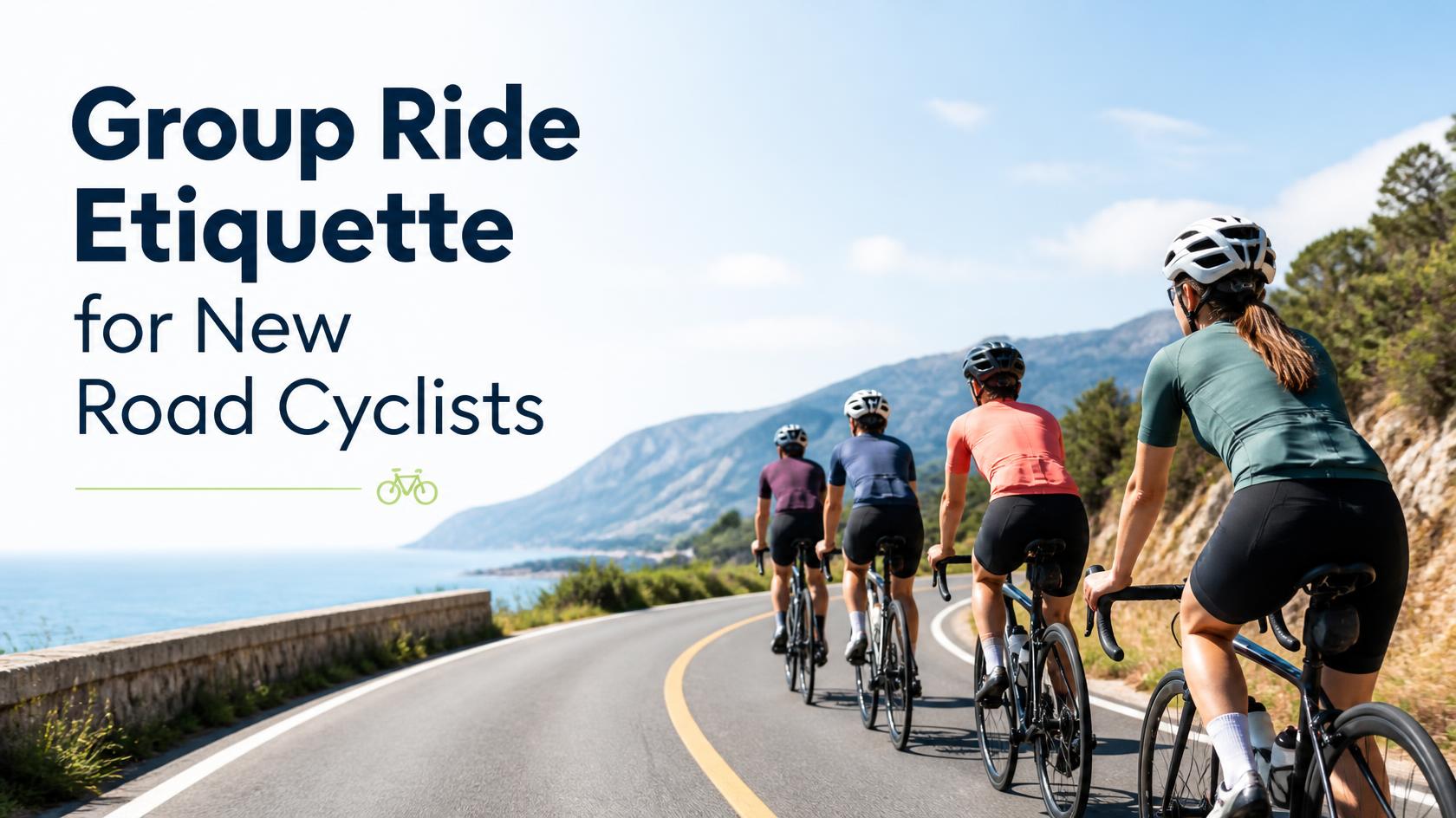
Joining a group ride can feel like walking into a meeting where everyone seems to know the unspoken rules… except you.
There’s the pace, the hand signals, the rotating at the front, the “don’t be that rider” stories. It’s a lot.
You don’t need to be perfect to join a group ride. You just need to understand a few core etiquette rules that keep everyone safe, smooth, and happy. This guide explains them in plain language, with a focus on new road cyclists who have jobs, families, and limited time—and just want to ride without feeling awkward.
Before You Join Your First Group Ride
A good experience starts before you show up.
- Get comfortable on your bike alone first.
Most beginner guides suggest having a few solo or partner rides under your belt before jumping into a bunch of strangers, especially if you’re new to clip-in pedals. - Check the ride description.
Look for keywords like “beginner,” “no-drop,” or “women’s ride,” and ask about typical pace. Group rides are often faster than solo rides because of drafting, but beginner/no-drop rides should still feel manageable. - Show up early.
Arrive 10–15 minutes before start time so you can:- Confirm you’re in the right spot
- Ask questions
- Adjust clothing and gear without rushing
- Bring your own spares.
Carry a spare tube, pump or CO₂, tire levers, and basic tools. People will often help, but it’s your responsibility to be prepared.
Ride Predictably: The Golden Rule
Almost every group ride guide starts here: ride predictably.
This means:
- No sudden swerves left or right.
- No abrupt braking unless absolutely necessary.
- No weaving in and out of the group.
If you need to slow down or move:
- Signal with a clear call (“slowing,” “stopping”) and/or a hand gesture.
- Make gradual changes, not jerky ones.
Treat others the way you want to be treated. If you wouldn’t want someone to slam on the brakes in front of you, don’t do it to them.
Position on the Bike: Hands, Eyes, and Space
Basic positioning helps you stay stable and aware.
- Hands on the hoods.
Most group riding guides recommend riding with hands on the brake hoods (top of the rubber above your levers). This gives you:- Quick access to brakes and gears
- Good control and visibility
- Eyes ahead, not at the tire in front.
Look through the rider ahead at hip height or beyond, not directly at their rear wheel. This helps you see hazards and movements early. - Leave space when you’re new.
At first, leave more room in front and at the sides; you can close gaps gradually as you learn who rides smoothly. Many experienced riders also “pick and choose” who they sit behind based on consistency.
Point Out Hazards and Communicate
Communication is one of the biggest safety tools in a group.
Front riders have the best view and should:
- Call and/or point out obstacles:
- “Hole” or “pothole” (with a hand pointing down)
- “Gravel,” “stick,” “debris”
- “Car up” (ahead), “car back” (behind)
- “Slowing,” “stopping”
Calls should be:
- Clear but not constant; save them for things that matter.
- Passed back through the group so everyone hears them.
If you’re new, listen for the group’s typical calls and gradually join in once you’re comfortable.
Drafting Basics (Without Making People Nervous)
Drafting—riding in the slipstream of the rider ahead—lets the group go faster with less effort. But it’s also where many new riders feel nervous.
Basic drafting etiquette:
- Start with a slight gap (half to a full bike length) until you’re more confident.
- Keep your front wheel offset a few inches to one side, not directly overlapping the wheel ahead. This reduces the risk if the rider ahead moves sideways.
- Stay relaxed and avoid sudden movements. If the rider ahead slows slightly, gently adjust rather than slamming the brakes.
As you gain confidence, you can ride closer, but there’s no prize for riding uncomfortably tight.
Taking Turns on the Front (And When Not To)
In many group rides, riders rotate at the front to share the workload.
If you’re new:
- It’s okay to stay toward the back and observe at first.
- When you do move to the front:
- Maintain the same pace as the group, not your solo pace.
- Take a short pull (30 seconds to a few minutes), then ease slightly and signal for the next rider to come through.
Avoid:
- Half-wheeling: riding half a wheel ahead of your partner at the front and gradually increasing the speed, forcing them to chase. It’s a classic etiquette no-no and can make people quietly avoid riding with you.
If you’re not comfortable leading yet, you can say so—most groups will understand.
Climbing and Regrouping
Hills often split groups, and etiquette matters here too.
Common practices:
- On climbs, groups often spread out, with stronger riders drifting ahead.
- At the top or after the descent, good groups:
- Roll easy
- Check that everyone is up
- Wait for riders dealing with mechanicals or tough climbs
You can help by:
- Calling out if someone has a flat or mechanical and making sure at least one other rider stays with them.
- Giving encouragement rather than commentary if someone is struggling.
Take a look at our article to see how to ride hills more confidently before you join hillier group rides.
Handling Mechanical Issues
Mechanical problems happen: flats, dropped chains, misbehaving derailleurs.
Group norms usually are:
- You carry your own spares (tube, pump, etc.), and the group helps with labor and company.
- At least one person stays with the rider fixing the problem.
- The group often waits or rolls very easy until everyone is back together, especially in cold or wet conditions.
If you have a flat:
- Move to a safe spot off the road.
- Let the group know clearly.
- Accept help if offered—it speeds things up and builds camaraderie.
Basic “Don’t Be That Rider” List
Most group ride etiquette pieces call out similar behaviors to avoid.
Try not to be:
- The rider who brakes suddenly without warning.
- The rider who swerves around obstacles instead of calling and pointing them out.
- The rider who half-wheels and constantly nudges the pace up.
- The rider who doesn’t wait when someone has a mechanical.
- The rider who spits or tosses a bottle directly in the line of other riders (if you need to spit or toss something, move out of the line and check behind first).
When in doubt, think: “Would I appreciate this if I were behind me?”
Safety and Comfort for Women and New Riders
For women and newer riders specifically, a few additional points help:
- Ask questions. Most women’s groups and clubs explicitly encourage asking; there’s no such thing as a stupid question.
- Start at the back. It’s often easier to observe dynamics from the back before riding in the middle of the bunch.
- Choose your line-mates. Over time, you’ll learn who rides predictably and who doesn’t. It’s okay to position yourself near smoother riders.
**TIP: Seek out women-friendly or beginner-friendly rides where etiquette is explained upfront and the vibe is more supportive.
How Group Rides Fit Into Your Training and Recovery
Group rides can be:
- Great fitness builders (you often ride faster than solo because of drafting and motivation).
- Mentally energizing—social time built into your training.
They also need to be balanced with:
- Hard days vs easy days (your recovery guide can help readers place group rides smartly in their week).
- Fuel and hydration (your Beginner Cycling Nutrition content shows what to eat before, during, and after).
- Gear and clothing (your gear and “what to wear” articles make sure people show up prepared, not freezing or overheating).
Where to Go From Here
You don’t need to be perfect to join a group ride. You just need to:
- Ride predictably
- Communicate hazards and intentions
- Respect the pace and regrouping norms
- Bring your own basics and be willing to help others
Next steps:
- Use this article before your first or next group ride so you feel more confident.
- Pair it with:
- Road Cycling for Beginners: The Complete Guide
- Essential Road Cycling Gear for Beginners (for what to bring)
- Cycling Recovery Guide (for where group rides fit in your week)
- Beginner Cycling Nutrition and pre-/post-ride articles (for fueling group efforts)
Once you’ve done a few rides, you’ll realize that etiquette isn’t about perfection—it’s about keeping the group safe and making the experience better for everyone, including you.
Leave a Reply