
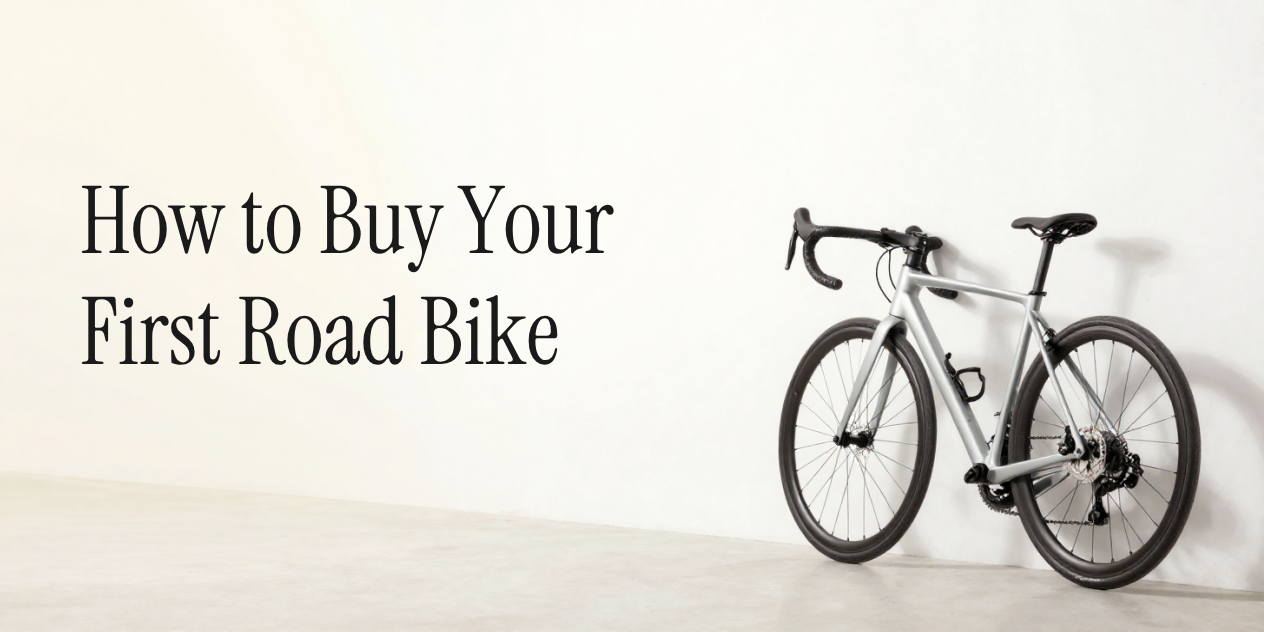
Walking into a bike shop (or scrolling endless pages online) can feel like stepping into a different language.
Aluminum vs carbon. Compact vs standard. Disc vs rim. Endurance vs race geometry. And then there’s the sales pitch, your budget, and the little voice asking, “Am I going to regret this?”
You don’t need to know everything to buy a good first road bike. You need to understand your goals, your budget, and a few key principles about fit, gearing, and quality—so you can walk into a shop (or onto a website) with confidence.
This guide is for busy riders who want a road bike they’ll actually ride and enjoy, not a trophy that makes them nervous.
Step 1: Get Clear on Your Goals
Before you worry about frame material or brand, ask:
- How do I actually plan to use this bike?
- Short fitness rides after work
- Longer weekend rides
- Group rides with a local club
- Eventually events or charity rides
- Where will I ride most?
- Hilly or rolling terrain
- Mostly flat
- City streets and paths
- Rural roads
- How often do I realistically think I’ll ride?
- 1–2 times per week
- 3+ times per week
Your answers help you:
- Avoid over-buying a race-focused bike when you really want comfort.
- Avoid under-buying a bike that will feel limiting once you start doing longer rides or group rides.
You can absolutely start with modest goals and let the bike grow with you—but knowing your direction helps anchor the decision.
Step 2: New vs Used (Plain Language Pros and Cons)
You can get a great first road bike either new or used; both have trade-offs.
New bike:
- Pros:
- Warranty and shop support
- You know the bike’s history
- Easier to get the right size and fit with help
- Cons:
- Higher cost
- You may pay for features you don’t need yet
Used bike:
- Pros:
- Lower cost for similar build quality
- Good way to “test” road cycling without a big investment
- Cons:
- No warranty, unknown history
- Fit and condition may be less obvious
- You need to be more careful about wear, damage, and age of components
If you’re not mechanically inclined or don’t have a trusted cycling friend, working with a reputable local bike shop often makes a new or lightly-used shop-certified bike the simplest path.
Step 3: Why a Good Local Bike Shop Still Matters
Even if you love browsing online, a good local bike shop can:
- Help you find the right size and fit for your body.
- Talk through your goals and suggest appropriate models.
- Make small adjustments to dial in comfort (stem length, bar height, saddle position).
- Offer local routes, group rides, and support when things need maintenance.
When you walk in, you can say something like:
“I’m new to road cycling. I’m looking for a comfortable road bike I can ride 2–3 times a week, including some hills and occasional group rides. My budget is around $X. I’d like something safe and reliable that won’t limit me as I improve.”
That gives them a clear picture and sets expectations.
Step 4: Fit Basics (Without Getting Lost in Jargon)
Fit matters more than frame material or paint color.
You want:
- Frame size that matches your height and proportions.
- Reach (how far you stretch to the bars) that doesn’t feel extreme.
- Handlebar height that lets you maintain a slightly forward, but sustainable, posture.
Simple fit checks:
- When you’re on the bike:
- You can comfortably reach the brake hoods with a slight bend in your elbows.
- You’re not forced into an aggressive, super-low position unless you want that.
- Your knee is slightly bent at the bottom of the pedal stroke, not locked out or very bent.
“Endurance” or “fitness” road bikes generally have more relaxed geometry and higher front ends than pure race bikes—this is usually a better starting point for most new riders who care about comfort and long-term enjoyment.
Step 5: Frame Material and Brakes (Keep It Simple)
For a first road bike, you don’t need to obsess over every detail:
Frame material:
- Aluminum with a carbon fork is a very common, solid choice for first road bikes—comfortable enough and budget-friendly.
- Carbon frames can offer more comfort and performance, but they cost more; many riders only move to full carbon once they know they’re in this for the long haul.
Brakes:
- Modern disc brakes (mechanical or hydraulic) provide strong, consistent stopping, especially in wet conditions.
- Rim brakes can still be adequate on many bikes, but disc is now common and worth considering for long-term flexibility and safety.
If your budget allows, a well-fitted aluminum or “entry-level carbon” bike with disc brakes can be an excellent first road bike.
Step 6: Gearing for Real-World Hills
Gearing can make or break your enjoyment—especially on climbs.
Look for:
- A compact crank set (often 50/34 tooth chain rings) rather than a “standard” big ring.
- A wide-range cassette at the back (with a large “big cog,” often 28 teeth or higher).
Together, these give you easier gears for hills, which:
- Help you maintain a sustainable cadence.
- Reduce strain on knees, hips, and lower back.
- Make challenging terrain more approachable as you build fitness.
You can literally tell the shop:
“I live in a hilly area and I’m new to riding hills. I’d like lower gearing to make climbs manageable.”
There is no prize for suffering up hills in overly hard gears.
Step 7: Entry-Level vs Mid-Range vs Higher-End
It helps to think in tiers rather than specific price points:
Entry-level tier:
- A safe, reliable road bike with decent components.
- Perfect if you’re new, on a tighter budget, or unsure how much you’ll ride.
- Might be slightly heavier but fully capable for fitness, local rides, and early group rides.
Mid-range tier:
- Lighter frame and better components (shifters/derailleurs, wheels).
- Smoother shifting, potentially more comfortable ride.
- Great if you know you’ll ride often and want something you won’t outgrow quickly.
Higher-end tier:
- Race-oriented or very lightweight frames, top-tier components, sometimes aero features.
- Really shines if you’re pushing performance goals or already deep into the sport.
You don’t need higher-end to enjoy riding or get fit. For most busy riders, entry to mid-range with good fit and smart gearing is the sweet spot.
Step 8: What to Prioritize First (And What Can Wait)
Prioritize:
- Fit and comfort.
- Safety and reliability (decent brakes, good wheels, solid construction).
- Gearing suited to your terrain.
Nice-to-haves that can wait:
- Ultra-lightweight or aero frames.
- Fancy carbon wheels.
- Integrated/hidden cables and high-fashion paint jobs.
You can upgrade parts later (wheels, contact points like saddle/bar tape), but a poorly fitted or unsuitable frame is much harder to “fix.”
Step 9: Questions to Ask at the Shop
You can turn this into a printable list later:
- “What size and model do you recommend for my height and riding goals?”
- “Is this bike more endurance-oriented or more race-oriented?”
- “What kind of gearing does it have? Will that be comfortable for hills where I live?”
- “Does this bike come with disc brakes? How do they compare to rim brakes for everyday rides?”
- “What do you offer in terms of after-sale support, tune-ups, and fit adjustments?”
- “If I decide to upgrade parts later (e.g., wheels), is this frame a good base to grow from?”
If you feel rushed or pressured into a more expensive option, it’s okay to pause, take notes, and come back another day or visit a second shop.
Step 10: Pairing Your New Bike with Safety and Skills
Once you’ve chosen a bike, you’ll plug it into the rest of your cycling system:
- Safety:
- Helmet with good safety ratings.
- Front and rear lights (e.g., Garmin lights that integrate with your head unit).
- Visibility and route choice Cycling Safety Checklist.
- Skills:
- Learning to ride in a group Group Ride Etiquette.
- Getting comfortable on hills How to Ride Hills.
- Practicing indoor vs outdoor balance Indoor vs Outdoor Cycling.
- Nutrition and recovery:
- Fueling rides Beginner Cycling Nutrition, pre-/post-ride guides, gels, drink mixes like Tailwind).
- Recovery habits Cycling Recovery Guide and download our free Recovery Checklist.
Your first road bike isn’t just a purchase—it’s the starting point for a broader lifestyle where gear, skills, fuel, and recovery all support each other.
Leave a Reply