
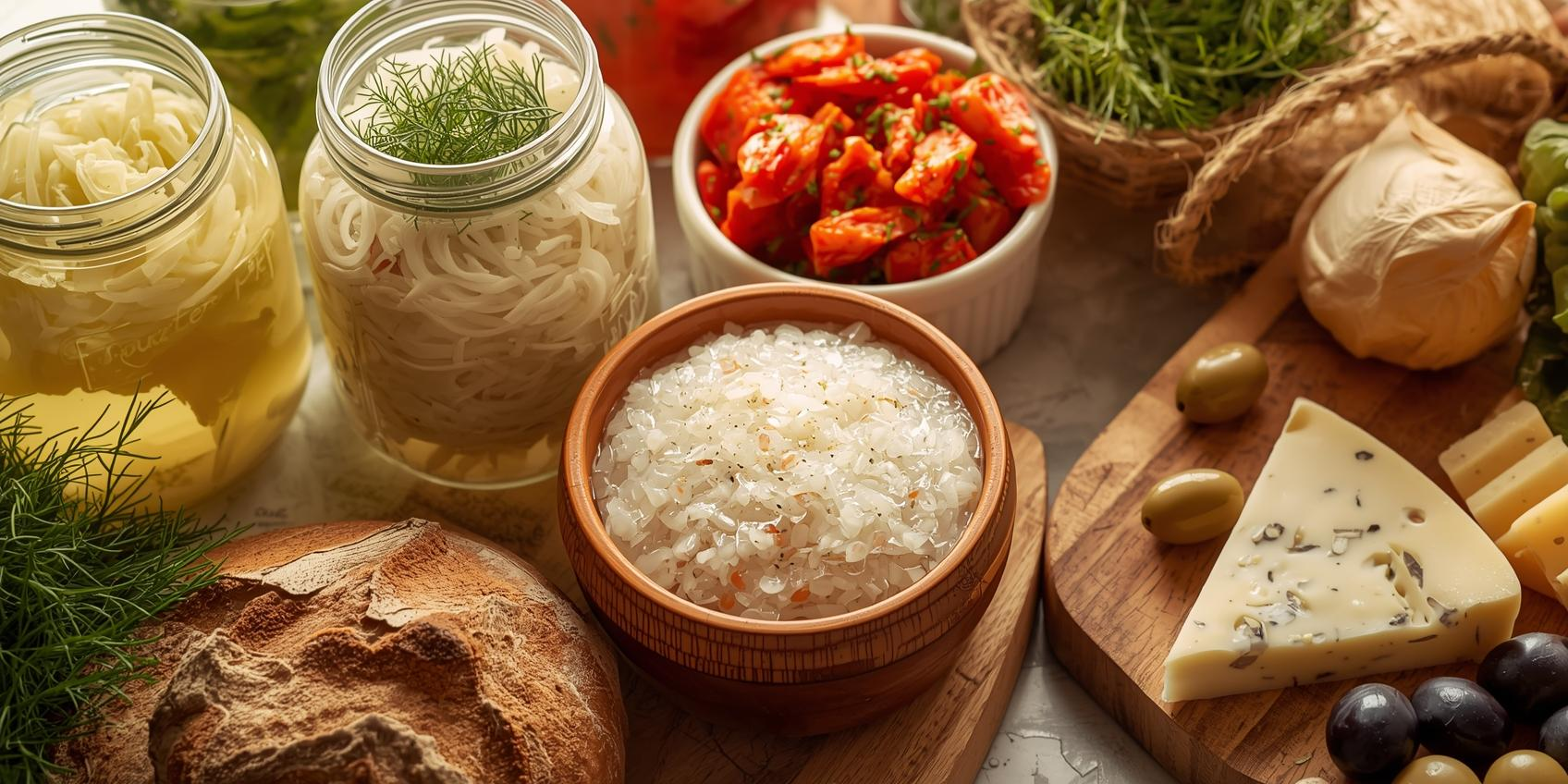
I want to talk about fermented foods today. Not in a rigid, “here’s what a clinical study says you must do” way, but in a practical, “here’s what is actually sitting in my fridge right now and why I haven’t stopped eating it” way. Because let’s be honest, that is infinitely more useful for real life.
If you’ve heard whispered talk about the gut brain connection for beginners but weren’t entirely sure what to actually do with that information, I completely get it. It sounded incredibly abstract to me for a long time, too.
But once I started paying close attention to how I felt on the days I was consistent with these simple swaps versus the days I wasn’t, I stopped needing a textbook to convince me. My energy levels, my mood, and my digestion were more than enough proof.
Let’s dive into how to improve gut health naturally without a single bit of lifestyle overwhelm.
So What Is the Gut-Brain Connection, Really?
If you’ve ever wondered, what foods support the gut brain axis?, it helps to understand why these two systems talk to each other in the first place.
Here is the short, coffee-chat version: your digestive system produces about 95% of your body’s serotonin—the exact neurotransmitter responsible for regulating your mood, sleep, and daily appetite. Your gut and your brain are in constant, two-way communication through a highway called the gut-brain axis.
When your digestive system is inflamed or imbalanced, that internal signal gets incredibly loud and chaotic. But when it’s calm, supported, and balanced, your mind feels steady, too.
Integrating fermented foods for digestion introduces beneficial live bacteria (probiotics) right into your system. Those helpful little microbes naturally crowd out the bad stuff, ease inflammation, and keep that brain signal quiet and steady. That’s the whole philosophy behind why a quiet gut leads to a quiet mind—and it’s the heartbeat of everything we do here.
What I Actually Keep in My Fridge: Our Staples
I am not doing anything fancy or complicated. There is no elaborate, messy fermentation setup in my kitchen and no rigid routine. Here are the simple whole foods our household genuinely uses on a regular basis:
- Naturally Fermented Refrigerator Pickles: These are the cold, crisp ones found in the refrigerated section—not the shelf-stable vinegar ones in the pantry aisle.
- Sauerkraut: We don’t eat bowls of it; we just add a single forkful alongside dinner a few nights a week. It takes two seconds.
- Kombucha: We regularly enjoy a glass a few evenings a week after dinner. It completely satisfies that late-night “I want a little something sweet” feeling.
- Apple Cider Vinegar: I mix a tablespoon into a glass of water most nights as a simple, winding-down routine before bed.
💡 Danielle’s Pro-Tip for Shopping: Not all pickles and sauerkraut are created equal! If a jar is sitting warm on a regular grocery shelf, it has been pasteurized, meaning the beneficial live cultures are gone. Always look in the refrigerated section and verify that the label explicitly says “live cultures” or “naturally fermented.” Brands like Bubbies are a fantastic, clean starting point.
On the Apple Cider Vinegar Habit
I easily get the most questions about this one. While ACV isn’t technically a probiotic food, it does wonders for supporting optimal digestion—specifically in how your body processes your evening meal and stabilizes your blood sugar overnight.
There are plenty of apple cider vinegar before bed benefits, but I originally started doing it simply because I wanted to test the claims myself for 30 days. I quickly noticed I woke up feeling significantly less bloated and much more settled, so it earned a permanent spot in my routine.
I do one tablespoon of raw, unfiltered ACV in about 8 ounces of water. Some people like to add raw honey or fresh lemon, but I keep it completely plain.
⚠️ Note: Just make sure you never drink it completely straight! The intense natural acidity isn’t great for your tooth enamel over time, so always dilute it in water.
How to Start Without Overthinking It
If you’re completely new to learning how to improve gut health naturally, please just pick one thing. Don’t try to change your entire kitchen tomorrow.
Pour a small glass of kombucha after dinner for two weeks and see how your body responds. Or throw a single forkful of tangy sauerkraut onto your plate next to whatever dinner you were already planning to make. You don’t need to do everything at once to move the needle.
Danielle’s Take: Consistency Beats Perfection
I’ve tried a lot of wellness and health advice over the years, and one major thing I’ve learned is that consistency beats perfection every single time. I still enjoy dessert. I still eat out with friends. The difference is that I understand how those choices fit into the bigger picture instead of feeling guilty about them.
True wellness isn’t about a complete lifestyle reinvention or a rigid set of rules. It’s about small, real choices made consistently that add up to a difference you can actually feel. Give your gut a little grace, keep it simple, and let your body find its natural rhythm.
The Quick Skim Takeaway
Discovering how to improve gut health naturally doesn’t require a lifestyle overhaul. By incorporating a few fermented foods for digestion—like naturally fermented refrigerator pickles, kraut, or enjoying apple cider vinegar before bed benefits—you can beautifully calm the gut-brain axis, crush bloating, and support your daily mood. Data over drama, always!


