
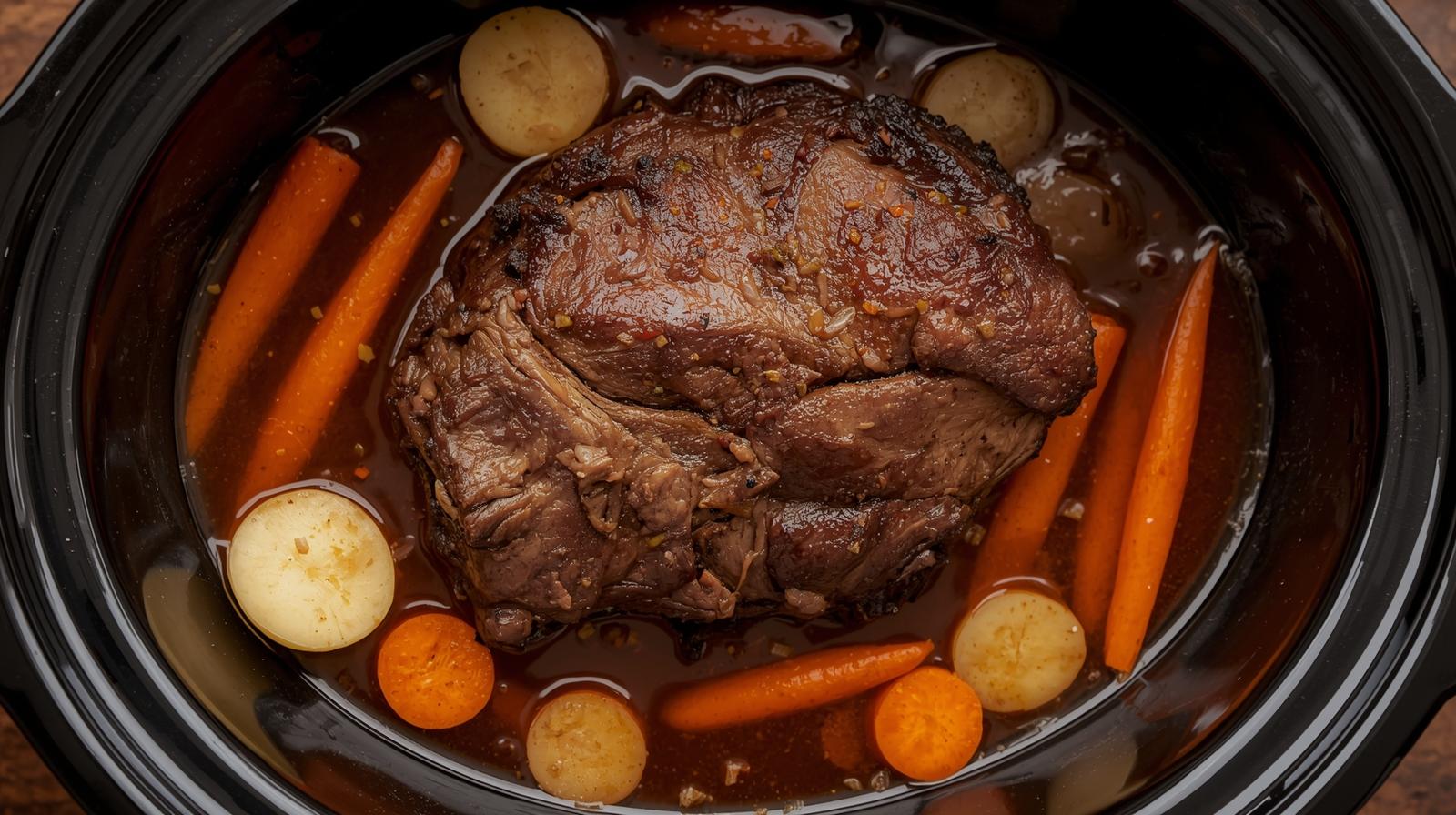
There is something deeply grounding about coming home to a house that smells like a savory beef roast has been simmering all day. It’s one of those small, everyday things that feels like a genuine act of care—for your family, and honestly, for yourself.
I’ve been using a slow cooker for years, mostly for my go-to beef pot roast, hearty winter chilis, and nourishing shredded chicken soups. But somewhere along the way, I realized it wasn’t just a convenient time-saver. It was quietly doing something incredible for how our bodies digest and absorb food. Once I understood the real wellness perks, I started being a lot more intentional about building easy scratch cooking habits around it.
This isn’t about chasing a trendy kitchen fad. Slow cooking is one of the oldest, most traditional ways humans have prepared food. Let’s look at why this ancient method has stuck around and how it can help you cultivate a calmer, happier kitchen.
The Science of “Low and Slow”: Why It’s Easier on Your Digestion
If you’ve ever wondered, why is slow cooked meat easier to digest?, it all comes down to what a gentle, low temperature does to food over several hours. Fast, high-heat cooking simply can’t replicate these biological benefits:
- Collagen Release: The gentle heat breaks down tough connective tissue in meat into pure collagen, which your gut lining actively uses for cellular repair.
- Easier Protein Breakdown: Long, slow cook times essentially “pre-digest” dense proteins, drastically reducing the heavy lifting your stomach has to do.
- Maximum Mineral Absorption: Cooking bone-in cuts or adding a splash of bone broth allows for a slow, thorough release of bioavailable minerals—like magnesium, calcium, and phosphorus—directly into your sauce.
- Lower Inflammatory Compounds: High-heat methods like grilling or frying create advanced glycation end-products (AGEs). Low-temp simmering produces far fewer of these inflammatory compounds.
- Gentler Vegetables: Slow-cooked root vegetables become incredibly soft, making them significantly easier on sensitive digestive systems.
Healthy Slow Cooker Chuck Roast: The Family Staple
I make this classic comfort meal entirely from scratch. There are no processed seasoning packets or mysterious sodium bombs here—just real, simple ingredients I always keep stocked in the house. It takes about 10 minutes of prep in the morning, and the countertop does the rest of the work while you live your life.
Danielle’s Slow Cooker Beef Roast Blueprint
- The Cut: 3 to 4 lbs chuck roast, well-marbled
- The Veggies: Carrots, potatoes, and yellow onion (a rough, rustic chop—nothing precise!)
- The Aromatics: Several whole or smashed garlic cloves, salt, black pepper, and dried thyme
- The Liquid: A splash of Worcestershire sauce and 1–2 cups of beef broth (homemade if I have it, high-quality store-bought otherwise)
- Optional: A few sprigs of fresh rosemary from the garden
The Method: Simply season the roast generously, nestle your chopped vegetables all around it, pour the broth over everything, and set your cooker to LOW for 8–10 hours. That is it. By dinnertime, the beef completely pulls apart with a fork, and the cooking liquid transforms into a rich, natural gravy.
The reason this is one of my favorite slow cooker recipes for gut health is that it genuinely feeds the whole family without a single complaint—including the picky eaters. Plus, the leftovers taste even better the next day.
Cozier Days: Wholesome Soups and Chili
Once the weather shifts and the days get shorter, the slow cooker comes out almost every single week in our household.
My scratch-cooked chili is a straightforward ground beef and bean situation, seasoned naturally with chili powder, cumin, garlic, and diced tomatoes. Letting it go on low for 6 to 7 hours coaxes out a rich depth of flavor you just can’t replicate on a rushed weeknight stovetop. It also reheats beautifully for up to three days, which is a lifesaver when you’re balancing a busy schedule.
For winter soups—like chicken vegetable or a simple bone broth-based vegetable soup—the machine does all the heavy lifting. You aren’t babysitting a boiling pot on the stove. You’re out living your life and coming home to a fully finished dinner.
📋 Product Recommendation: If you don’t already own one, a classic Crock-Pot 6-quart manual slow cooker is the absolute gold standard to start with. It’s large enough for a generous family-sized chuck roast, incredibly simple to operate, and has been a workhorse in my kitchen for years. The 6-quart capacity is key—anything smaller limits your batch cooking!
Danielle’s Take: Consistency Beats Perfection
I’ve tried a lot of different health and wellness advice over the years, and one thing I’ve learned is that consistency beats perfection every single time. Between working, lifting weights, and riding 3 to 4 days a week with my husband, our schedule is packed. We don’t eat well because we have hours of empty free time; we eat well because we build habits that work with our real life.
Utilizing benefits of slow cooking meat isn’t about being an elite gourmet chef. It’s a practical hack that makes nourishing, from-scratch cooking completely possible on days when standing over a hot stove for an hour sounds exhausting. Drop the guilt of not making a picture-perfect meal every night, lean into tools that give you your time back, and focus on nourishing your body sustainably.
The Quick Skim Takeaway
Embracing slow cooker recipes for gut health is one of the easiest ways to support your family’s digestion without spending your entire evening in the kitchen. Understanding the benefits of slow cooking meat allows you to turn a standard healthy slow cooker chuck roast into a collagen-rich, easily digestible feast. Focus on real ingredients, lean on simple countertop tools, and let dinner cook itself!


