
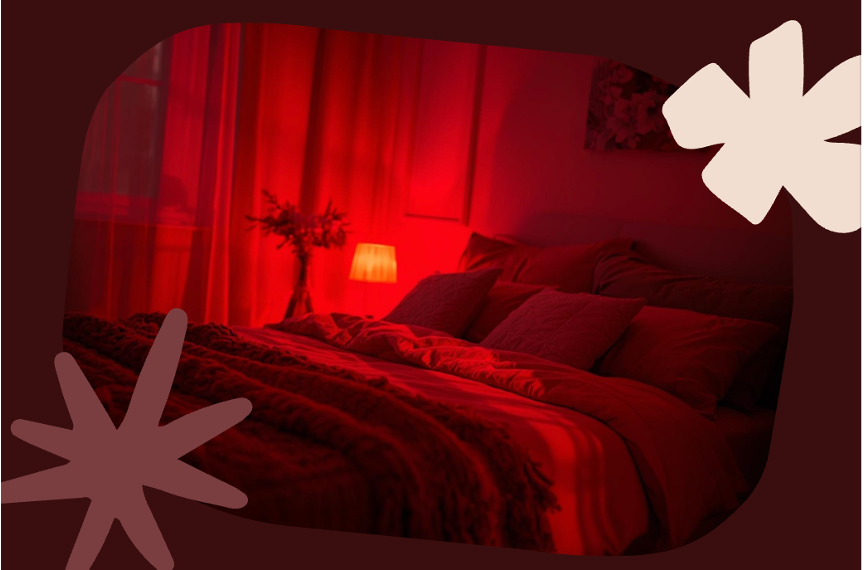
For years, we’ve been told to fill our homes with bright, “daylight” bulbs to stay productive and energized. And while that’s great for a 2:00 PM kitchen cleaning session, have you ever thought about what that light is doing to you at 9:00 PM?
My husband and I have been hearing about the wonders of red light for years, everything from how it helps your skin glow to how it speeds up muscle healing. But the real “lightbulb moment” (pun intended!) came when we started looking at the other side of the spectrum: the blue light from our phones, TVs, and overhead bulbs.
If you’re struggling to settle down at night, your lighting might be picking a fight with your brain. Here’s why it’s time to stop the blue light battle and embrace the red.
“At Quietly Well, I only recommend products I truly believe in. Some of the links below are affiliate links, which means if you choose to make a purchase, I may earn a small commission at no extra cost to you. This helps support the blog and allows me to keep creating free resources for you. Thank you for being here!”
The Science of “Sleep Signals”
Your body has an internal clock (your circadian rhythm) that is obsessed with light.
- Blue Light: Tells your brain, “The sun is up! Stay alert! Stop making melatonin!”
- Red Light: Sits at the gentlest end of the spectrum. It’s the only light that doesn’t signal your brain to wake up.
When you switch to red light, you’re finally giving your body permission to do what it’s designed to do: produce the hormones that make you feel sleepy and restored.
3 Reasons to Add a Red Light to Your Nightstand
1. It Protects Your Melatonin Unlike the harsh glare of your phone or your bathroom vanity, red light doesn’t suppress melatonin. This means you can actually fall asleep faster and stay in those deep, healing stages of sleep longer.
2. It Turns Off “Alert Mode” Have you ever turned on a regular light in the middle of the night and felt instantly “jolted” awake? Red light provides enough illumination to move around or read your book without triggering that “emergency” alertness in your nervous system.
3. It’s the Ultimate “Day is Done” Cue In our house, the red light is a boundary. Once that small lamp on the nightstand goes on, it’s a signal that the workday is officially over. It creates a cozy, grounding atmosphere that practically begs you to relax.
Action Plan: Start Small
You don’t need to turn your whole house into a darkroom! Here is how to start:
- The “Small Lamp” Strategy: Buy one dedicated red light bulb (I love this one) and put it in your bedside lamp.
- The 60-Minute Rule: Flip that red light on 1–2 hours before you want to be asleep.
- The Phone Swap: When the red light goes on, the blue screens go away. Use that soft glow to read a physical book, journal, or do some light stretching.
The Bottom Line
If you want to perform at your best, you have to recover at your best. We spend so much time worrying about our “hustle,” but your success is actually built in the quiet moments of rest. Replacing a single lightbulb is one of the easiest, lowest-effort ways to upgrade your health and your mood.
Give it a try tonight. Your brain (and your morning self) will thank you!
👉 Red Light Bulb for Nighttime Use
This red light bulb is an easy way to introduce sleep-friendly lighting into your evening routine:
https://amzn.to/3YswZkh

Using red light before bed is a simple, science-backed way to create a calmer nighttime environment and support better sleep.
Affiliate Disclosure: Some links in this post are affiliate links. If you make a purchase, I may earn a small commission at no extra cost to you. All recommendations are thoughtfully curated to support calm, everyday living.