
If you read my recent guide to rooted kitchen fats, you already know how passionate I am about finding a wholesome substitute for industrial seed oils. Returning to traditional, ancestral fats like grass-fed butter, ghee, and cold-pressed avocado oil is one of the simplest ways to give your body clean, sustained energy that lasts all day—without the exhausting blood sugar rollercoasters.
But out of all the traditional fats we covered, there is one absolute king of the kitchen that deserves its own solo spotlight: beef tallow.
If you look for high-quality, jarred tallow at a specialty grocery store, you might get a bit of immediate sticker shock. It can be surprisingly expensive! But as a friend, let me tell you a secret: if you already buy quality beef for your family, you can easily create your own premium cooking oil right at home for absolutely free.
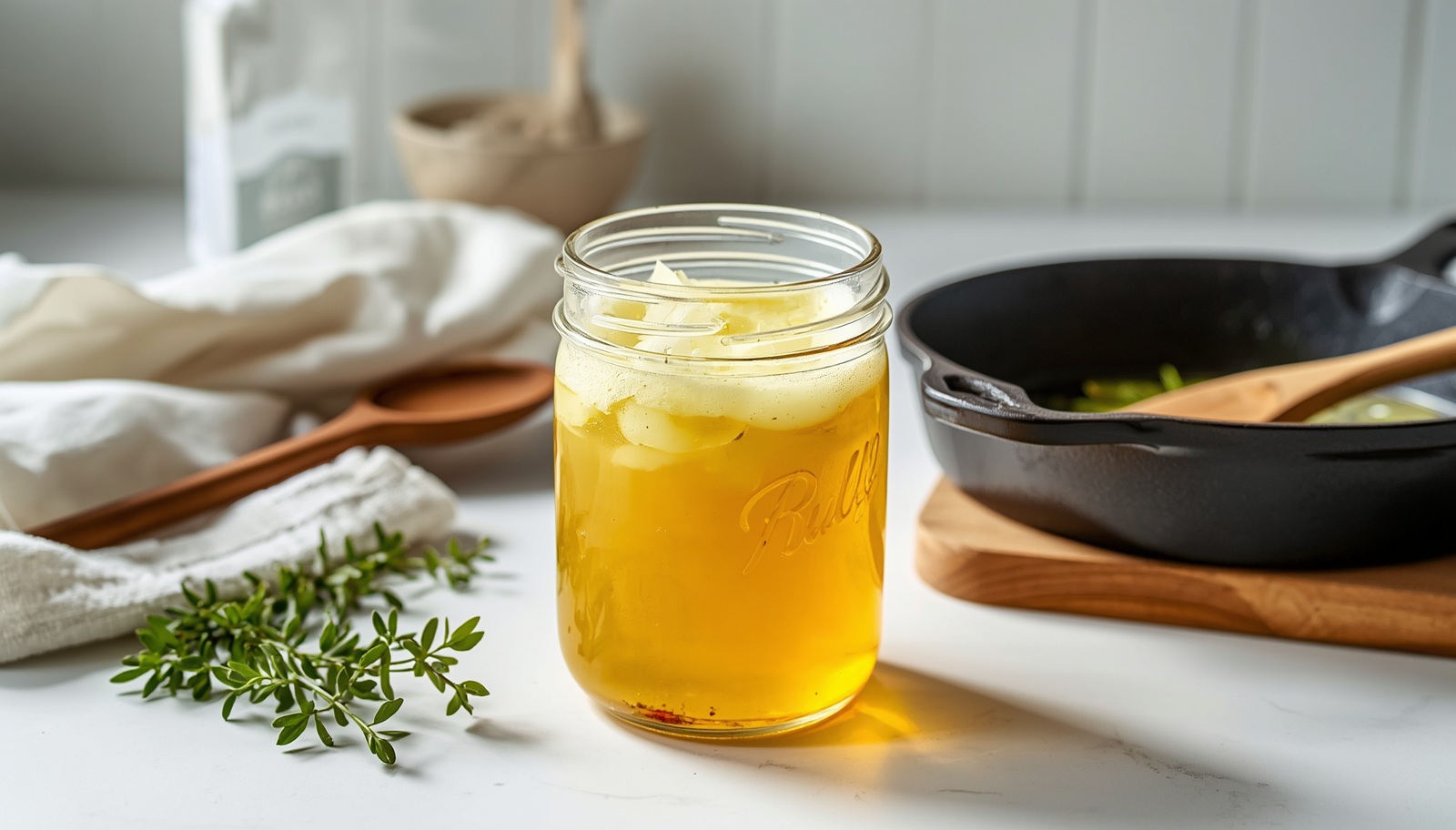
In our house, my husband loves to smoke a brisket a few times a year. A proper brisket requires quite a bit of trimming before it hits the smoker, which always leaves behind a massive pile of raw beef fat. Instead of throwing it in the trash, I rescue those trimmings, melt them down into pure, golden tallow, and store it in glass mason jars.
It gives us a free supply of incredible cooking oil that lasts for several months. If you already paid for the brisket, why would you not save the fat rather than buying store-bought oil? Let’s talk about how to make beef tallow using the simplest, hands-off method imaginable.

The Big Beef Tallow Cooking Benefits
Tallow is simply rendered beef fat—meaning it has been melted down and strained to remove any leftover moisture, protein, or meat bits. It solidifies at room temperature and looks a lot like grass-fed butter, but it comes with some massive advantages for your daily kitchen routine:
- An Exceptionally High Smoke Point: Tallow can safely handle heat up to 400°F without breaking down, smoking, or oxidizing. This makes it infinitely safer and healthier for high-heat skillet cooking than delicate vegetable oils.
- Rich in Fat-Soluble Vitamins: Because it is a whole-food fat, it naturally contains vitamins A, D, E, and K, along with anti-inflammatory fatty acids that support a natural lifestyle.
- Next-Level Savory Flavor: It doesn’t make your food taste heavily like a pot roast, but it adds a rich, savory depth that takes everyday cooking from ordinary to restaurant-quality.
How to Use Tallow in Your Daily Cooking
You can use this gorgeous fat anywhere you would normally use butter or processed oil. A little bit goes an incredibly long way!
- Searing and Pan-Frying: Drop a tablespoon into a hot cast-iron skillet before searing a steak, browning chicken thighs, or frying up your morning eggs.
- The Best Roasted Vegetables: Toss your cubed sweet potatoes, broccoli, or Brussels sprouts in melted tallow before roasting them at 425°F. They get crispier than they ever would with standard olive oil.
- Savory Baking: Use it as the fat source for homemade sourdough biscuits or pie crusts for an unbelievably flaky texture.
How to Render Beef Fat: The Slow Cooker Method
“Rendering” sounds like a fancy culinary term you’d hear on a cooking show, but it really just means melting down fat over low heat for a long time until the water completely evaporates. Choosing to render beef fat in a slow cooker keeps the entire process hands-off and stress-free.
Step 1: Prep the Fat (5 Mins)
Take your raw brisket fat trimmings and chop them into very small cubes.
Danielle’s Tip: Chop the fat while it’s still partially frozen—it is infinitely easier to slice through! If you want it to melt even faster, you can pulse it in a food processor until it looks like ground meat.
Step 2: Low and Slow (4–6 Hours)
Place your chopped fat into your slow cooker. Turn the heat to LOW, pop the lid on, and walk away. Check on it every hour or so and give it a quick stir. You’ll notice it slowly liquefy into a beautiful, clear amber pool while small crispy bits (called cracklins) float to the top.
Step 3: Strain It Pure (10 Mins)
Once all the solid pieces have shriveled up and stopped releasing liquid, turn off the heat. Line a fine-mesh strainer with a couple of layers of unbleached cheesecloth over a large glass bowl. Carefully pour the liquid through. This catches every tiny sediment, leaving you with pure liquid gold.
Step 4: Jar and Store (5 Mins)
Pour the warm liquid into clean glass mason jars. As it cools down to room temperature, it will transform from an amber liquid to a beautiful, solid, creamy white fat.
Danielle’s Take: Consistency Beats Perfection
I’ve tried a lot of health and nutrition advice over the years, and one thing I’ve learned is that consistency beats perfection every single time. Transitioning your kitchen away from heavily processed ingredients doesn’t have to happen overnight, and it shouldn’t feel stressful or expensive.
Saving things like brisket trimmings isn’t just about food optimization; it’s about honoring traditional food preparation, reducing waste, and realizing that simple, whole-food swaps are right at our fingertips. Start small, use what you have, and enjoy the process of crafting your own ingredients.
FAQ: How Long Does Homemade Tallow Last?
Because pure tallow contains zero moisture or protein left behind after a thorough straining process, it is incredibly shelf-stable. You can keep your mason jars right in your pantry or directly on your counter for up to a year. However, if your kitchen runs warm or you just prefer to keep it extra cold, storing it in the refrigerator works beautifully too!
The Quick Skim Takeaway
Don’t throw away your beef trimmings! Grab this simple brisket fat trimmings recipe method: chop them up, toss them to render beef fat in a slow cooker on low for a few hours, and strain. You’ll get a premium, high-smoke-point, nutrient-dense cooking oil for free that will last on your counter for months. Data over waste, always!