
If you’re new to road cycling, you’ve probably wondered:
- What should I eat before I ride?
- Do I really need gels or sports drinks?
- Why do some rides feel amazing and others feel like I’m dragging a piano?
The way you fuel your rides matters just as much as your bike and your training. But you don’t need a science degree or a cabinet full of powders to get it right.
I’m a working professional, wife, mom, and cyclist. I don’t have time for complicated meal plans or six different bottles labeled “pre,” “intra,” and “post.” I need simple, repeatable nutrition that fits around meetings, school runs, and real life.
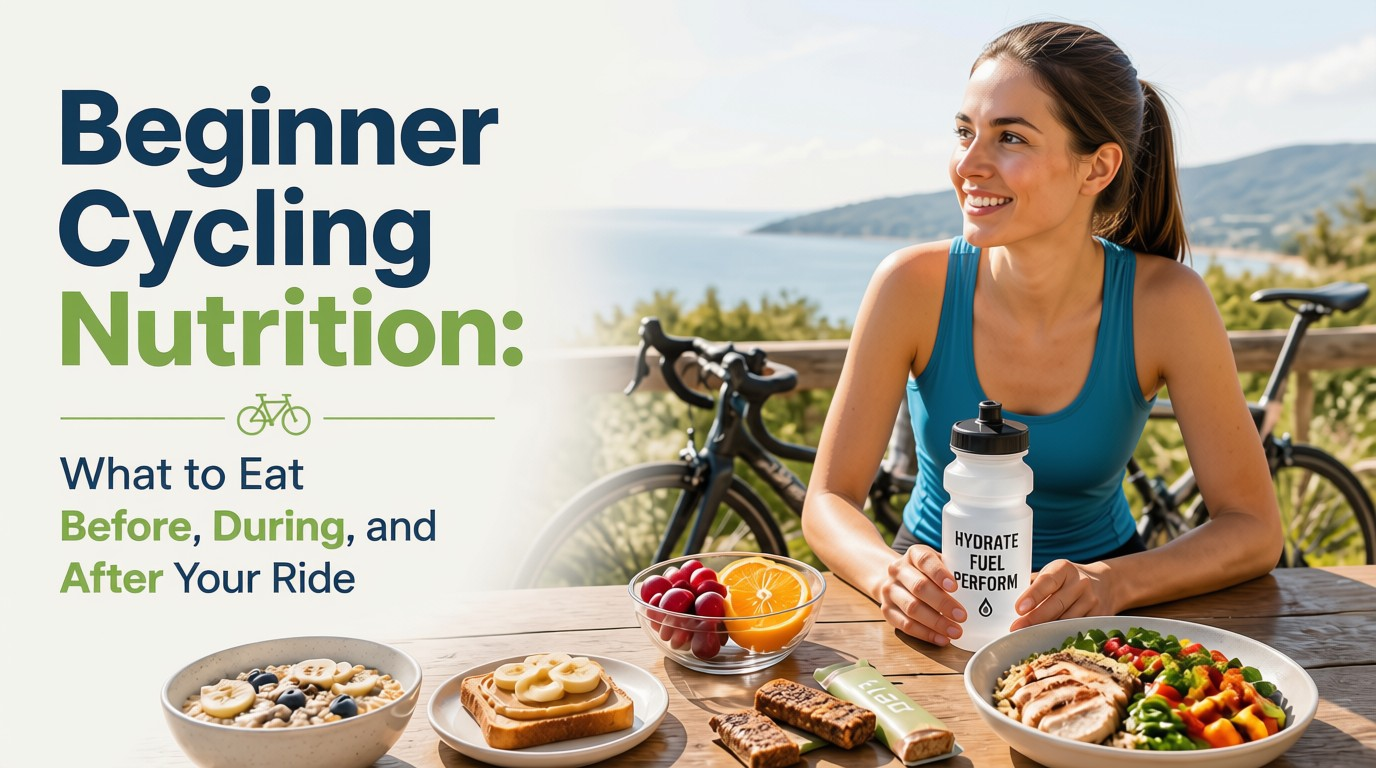
This guide breaks down beginner cycling nutrition in plain language: what to eat before, during, and after your rides, plus everyday habits that make every ride feel better.
Big Picture: What Beginner Cyclists Actually Need
Before we get into timing, here’s the 80/20 view:
- Carbs = main fuel for your rides (think oats, rice, potatoes, fruit, bread).
- Protein = repair & recovery (think chicken, eggs, Greek yogurt, beans).
- Fats = background energy & hormones (think nuts, olive oil, avocado), but keep them lower right around hard rides.
- Fluids & electrolytes = hydration and cramp prevention.
For beginners, you don’t need to obsess over grams per kilogram. You need:
- Balanced meals most of the time
- A simple plan for what to eat before, during, and after your rides
- Enough protein each day to recover well
What to Eat Before a Ride
Your pre-ride fuel should:
- Top up your energy (carbs)
- Sit comfortably in your stomach
- Match the length and intensity of your ride
2–3 Hours Before (Full Meal)
Ideal for weekend rides or evening rides when you have time.
Aim for:
- Carbs: base of the meal (oats, rice, potatoes, pasta, bread)
- Protein: moderate portion (eggs, chicken, Greek yogurt, tofu)
- Fats: small to moderate (nuts, cheese, olive oil)
- Low-ish fiber & fat so digestion is easy before you ride
Examples:
- Oatmeal with banana and a spoon of peanut butter
- Rice with chicken and vegetables
- Whole-grain toast with eggs and fruit on the side
- Greek yogurt with berries and granola
For most beginner rides, this is plenty for 60–90 minutes of easy to moderate riding.
30–60 Minutes Before (Quick Snack)
Perfect for early-morning rides or when time is tight.
Aim for:
- Mostly carbs, minimal fat and fiber
- Something easy to digest and familiar
Examples:
- Banana or apple
- Small granola bar
- A slice of toast with jam or honey
- A few dates or a small handful of dry cereal
If you roll out really early, at least try to get 30–50 g of carbs in (e.g., a banana + small glass of juice). Even that can make your ride feel noticeably better.
What About Fasted Rides?
For easy, short rides (<60 minutes), fasted riding can be okay if you feel good and don’t have blood sugar issues.
But for:
- Any ride with hard efforts
- Rides over ~60–90 minutes
…it’s usually more productive to eat something. You’ll ride stronger, enjoy it more, and recover better.
What to Eat During a Ride
This is where many beginners under-fuel: they wait until they are starving or bonking. Starting simple is better.
Rides Under 60 Minutes
- Most beginners don’t need food during these rides.
- Focus on water and a solid pre-ride snack/meal.
Rides 60–90 Minutes
This is the gray zone where a little fuel can really help, especially if:
- You’re riding hilly routes
- You’re riding harder than conversational pace
- It’s hot outside
Aim for:
- Around 30–45 g of carbs per hour after the first 30–45 minutes.
Examples:
- 1 small bar (check label: many have 20–30 g carbs)
- 1–2 bananas over the ride
- A few dates or dried fruit
- 1 basic energy gel
Start eating before you’re starving. By the time you feel truly hungry, your energy may already be dropping.
Rides 90+ Minutes
For longer rides, having a simple plan makes a huge difference.
General guideline for beginners:
- 60–90 g of carbs per hour on rides over ~90 minutes, especially if they’re moderate to hard.
You don’t have to hit this perfectly from day one. Think of it as a range to work toward as you experiment.
Examples per hour:
- 1 banana (~25–30 g) + 1 small bar (~20–30 g)
- 1–2 energy gels (~20–25 g each)
- A handful of chews + a half peanut butter sandwich (combining quick and slower carbs)
For very long or very hard rides (3+ hours), more advanced guidelines can go up to ~90–120 g of carbs per hour, but that’s something to build toward as your gut adapts.
Hydration and Electrolytes
Hydration is just as important as food, especially in heat.
Before Your Ride
- Sip water throughout the day
- For longer/hot rides, drink a glass or two of water 1–2 hours before you roll out.
During Your Ride
General guidelines (adjust for your body, weather, and sweat rate):
- About 500–800 ml (17–27 oz) per hour for most riders in moderate conditions.
- In hotter conditions, you may need more.
You can use:
- Water for most rides under ~90 minutes, especially if you’re eating some carbs
- Electrolyte drink for:
- Hot days
- Heavy sweaters
- Longer or harder rides
Electrolytes (especially sodium) help you replace what you lose in sweat and can reduce cramping and that “washed-out” feeling later.
After Your Ride
- Keep sipping water for a few hours after, especially if you were very sweaty.
- Including electrolytes post-ride can be helpful after long or hot rides.
What to Eat After a Ride (Recovery)
Your ride isn’t really “over” until you refuel. Recovery nutrition helps:
- Refill your energy stores (carbs)
- Repair your muscles (protein)
- Set you up to feel good for your next ride
Within 1–2 Hours After Riding
Aim for:
- Carbs + protein together
- Something you genuinely like and can prepare easily
Many sports nutrition guides suggest around 1.0–1.2 g carbs per kg and ~0.3 g protein per kg of body weight after hard rides, but you don’t need to calculate that every day as a beginner.
Think in simple terms:
- A plate or bowl with half carbs, one-quarter protein, one-quarter veggies/fruit is a solid default.
Examples:
- Rice bowl with chicken and vegetables
- Pasta with lean meat sauce and a side salad
- Omelet with potatoes and fruit
- Smoothie with fruit, oats, and protein powder
- Greek yogurt with granola and fruit
On very easy, short rides, your normal meal schedule is usually enough. On longer or harder rides, be more intentional.
Day-to-Day Nutrition for Cyclists (Beyond the Ride Window)
While ride timing matters, your everyday eating pattern sets the foundation.
For most active adults, many guidelines suggest:
- Consistent protein across the day to support muscle repair (often in the range of 1.6–2.0 g per kg per day for people training regularly, adjusted to your body and goals).
- Carbs that match your training load (more on big ride days, less on rest days).
- Enough fats for hormones and satiety, but not so high that carbs get squeezed out on training days.
You don’t have to nail perfect numbers. Focus on:
- Protein at each meal (20–30+ g)
- Plenty of carbs on riding days
- Colorful fruits and veggies
- Healthy fats in moderate amounts
As a busy working mom, I think in “templates,” not macros:
- Breakfast: protein (eggs, Greek yogurt, protein shake) + carbs (oats, toast, fruit)
- Lunch: protein + carbs + veggies (rice bowls, big salads with grains, wraps)
- Dinner: protein + carbs + vegetables (sheet pan meals, skillet meals)
Then I adjust portions based on whether it’s a ride day, rest day, or big training day.
Common Beginner Nutrition Mistakes (And How to Avoid Them)
- Riding on fumes: not eating anything before or during longer rides.
- Fix: small carb-focused snack before; simple carbs during rides over ~60–90 minutes.
- Under-hydrating: bringing one tiny bottle for a 2-hour hot ride.
- Fix: aim for 500–800 ml per hour in most conditions, more in heat.
- Trying all-new foods on the bike: experimenting with gels, bars, and heavy snacks mid-ride.
- Fix: test new foods on shorter rides first to see how your stomach responds.
- Ignoring recovery: skipping food for hours after a long ride, then overeating later.
- Fix: plan a simple carb + protein meal or snack for within 1–2 hours post-ride.
- All-or-nothing mindset: thinking you need perfect nutrition or it doesn’t “count.”
- Fix: aim for better, not perfect. Every small upgrade adds up.
Putting It All Together: Simple Plans for Real Life
Here are three examples you can plug into your week.
Example 1: Early-Morning 60-Minute Ride (Before Work)
- Before (30–45 min):
- Banana + small handful of cereal, or
- Toast with jam + small coffee
- During:
- Water
- After (breakfast):
Example 2: 90-Minute Weekend Ride (Moderate Pace)
- 2–3 hours before:
- Oatmeal with banana and peanut butter, or
- Rice + eggs + some fruit
- During:
- 1 bottle of water or light electrolyte drink
- 1 small bar or banana halfway through
- After:
- Rice bowl with chicken and veggies, or
- Sandwich + side salad + fruit
Example 3: 2–3 Hour Ride (Training or Event Practice)
- 2–3 hours before:
- Solid meal with carbs + protein (oats, rice bowl, pasta + lean protein)
- During:
- 1 bottle per hour (water + electrolytes in heat)
- Aim for 30–60 g carbs per hour (mix of bars, bananas, gels, chews, or simple snacks)
- After:
- Carb + protein-rich meal within 1–2 hours
Where to Go From Here
You don’t need perfection to fuel your rides well. You need simple, repeatable habits:
- Eat some carbs before you ride
- Bring a little fuel on rides longer than ~60–90 minutes
- Drink regularly
- Have a carb + protein meal or snack after hard rides
Next steps:
- Read “Road Cycling for Beginners: The Complete Guide” to connect nutrition with your overall riding plan.
- Check out “Essential Road Cycling Gear for Beginners” if you’re still dialing in your setup.
- Watch for future posts where I’ll break out:
If you want high-protein meal ideas that work for both cycling and busy work days, join the Quietly Well email list—I share the actual meals and snacks I use week to week.
You’re allowed to keep this simple. Eat enough. Drink enough. Pay attention to how you feel. Adjust. That’s beginner cycling nutrition done right.
Leave a Reply