
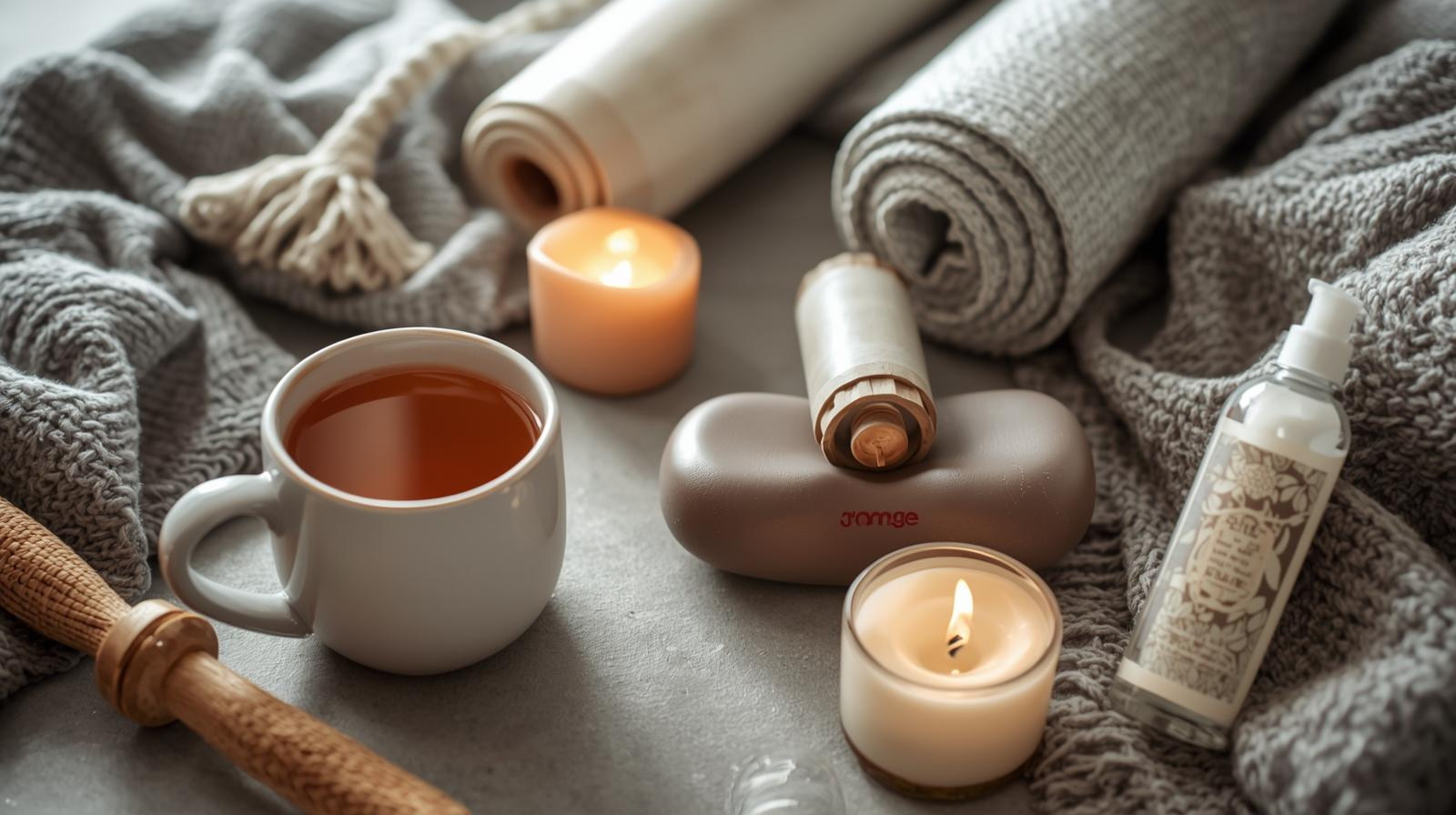
Wellness isn’t just about movement—it’s also about recovery.
Daily life—whether sitting at a desk, chasing after kids, or tackling workouts—puts strain on your body. Recovery and comfort are essential to staying energized, focused, and feeling your best. Over time, I’ve found a few simple tools that quietly improve recovery and help me feel restored without leaving home.
Here’s how to create a small, effective recovery corner in your space.
1. Foam Roller
Foam rollers are the ultimate at-home tool for releasing tension and improving circulation.
Benefits:
- Relieves muscle tightness
- Improves flexibility and mobility
- Reduces soreness after daily activity
Quick Tip: Roll slowly and focus on areas of tension for 1–2 minutes at a time. (Foam Roller)
2. Massage Tools / Massage Gun
Massage guns and handheld massagers bring deep tissue relief straight to your home.
Benefits:
- Targets sore muscles quickly
- Boosts blood flow for faster recovery
- Convenient for post-workout or long sitting sessions
Quick Tip: Start on a low setting and increase intensity gradually to avoid over-stimulation. (Hyperice Massage Gun)
3. Yoga Mat & Stretching Accessories
A dedicated mat encourages daily movement and gentle stretches that keep your body limber.
Benefits:
- Supports a consistent stretching routine
- Improves posture and flexibility
- Creates a calming, intentional space for body care
Quick Tip: Keep blocks, straps, or resistance bands nearby for a variety of stretches and recovery exercises. (YogaMat)
4. Comfortable Seating & Support Cushions
Even at rest, proper support matters.
Benefits:
- Reduces back and neck strain while working or reading
- Encourages better posture
- Complements other recovery tools like foam rollers
Quick Tip: Add a supportive lumbar pillow or a cozy chair to your recovery corner for a complete wellness setup.
5. Consistency Over Intensity
Recovery works best when it’s built into your daily routine.
Simple Practices:
- Stretch or roll for 10 minutes each morning or evening
- Use massage tools a few times per week
- Combine with deep breathing or meditation for mind-body wellness
Quick Tip: Treat your recovery time like an essential appointment—it’s just as important as work or workouts.
Conclusion
Recovery and comfort don’t require a gym membership or complicated equipment. With a few key tools—foam rollers, massage guns, yoga mats, and supportive seating—you can create a small at-home recovery corner that keeps your body and mind feeling restored.
For more ways to make your home a wellness hub, check out our series: The Wellness Items That Actually Changed How My Home Feels.
Affiliate Disclosure: Some links in this post are affiliate links. If you make a purchase, I may earn a small commission at no extra cost to you. All products are personally curated for quality and usefulness.


